
Precision Tooling: Essential Guidelines for Injection Mold and Die Design
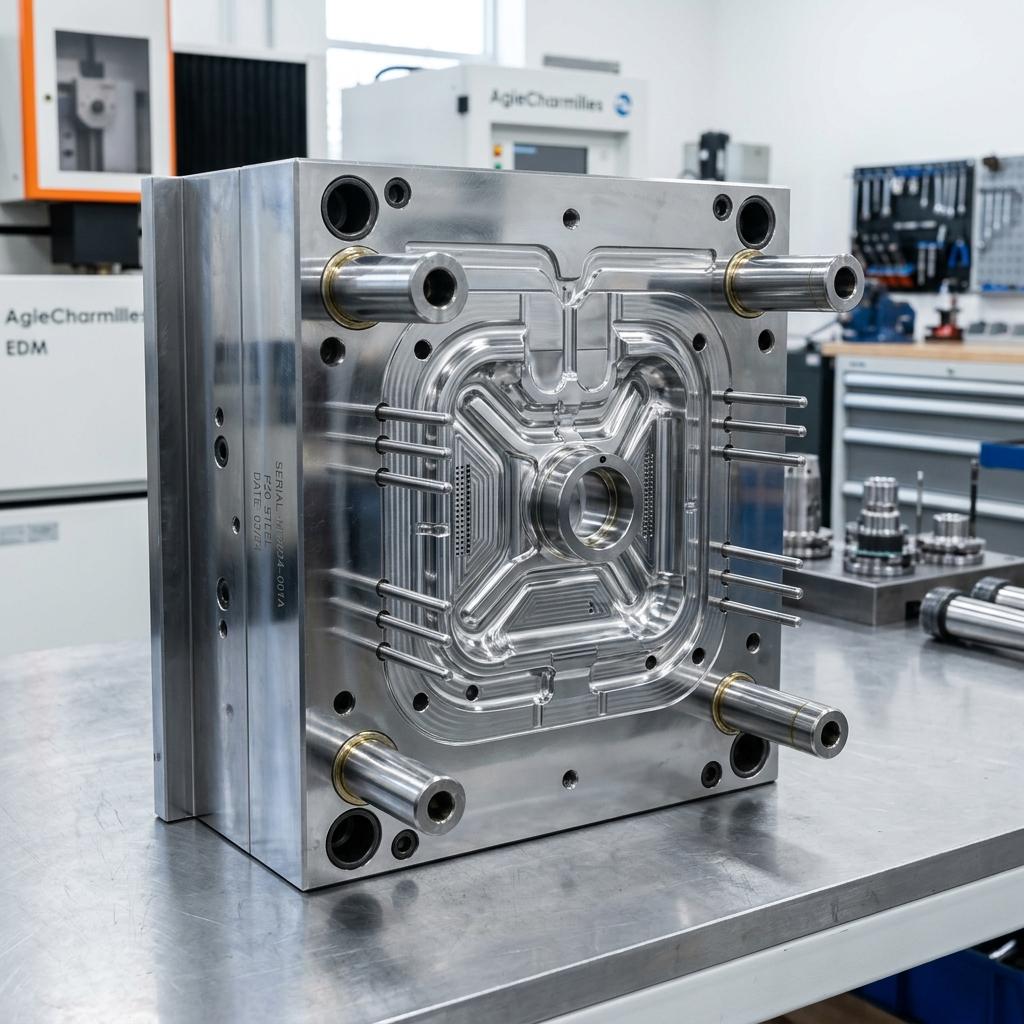
In mass production, precision tooling is critical to manufacturing high-quality plastic and metal parts. ThinkToReality's tool designers balance mold structural integrity, plastic cooling physics, and mechanical ejection systems to ensure clean, defect-free parts and a long tool lifespan. Precision tooling aligns the core and cavity halves under extreme clamping pressures.
A minor tool design mistake can lead to cosmetic issues like sink marks or structural deformation. Toolmakers must account for shrinkage parameters that vary across materials (such as ABS, Polycarbonate, or Nylon). ThinkToReality's tooling division combines advanced thermal cooling engineering with robust mechanical actions.
1. Draft Angles: Allowing Easy Part Release
As molten plastic cools inside the mold, it shrinks onto the steel core. Without draft angles (tapered vertical walls), friction will scratch the part or cause it to stick, damaging the surface finish. ThinkToReality's mold design incorporates a draft angle of 1° to 2° on all vertical faces to allow the ejector pins to push the part out smoothly.
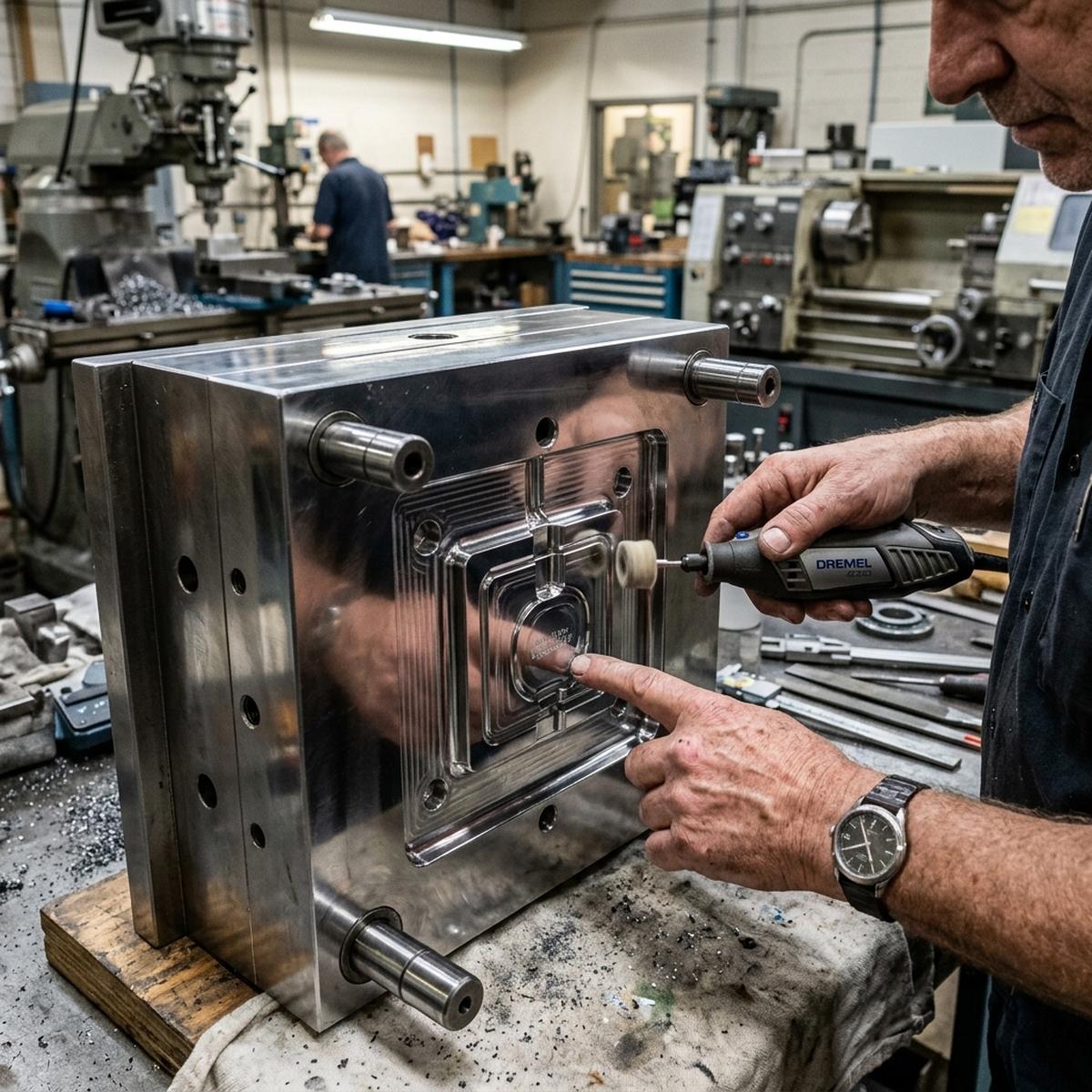
Cavity layout designs and polished injection molds developed at ThinkToReality tooling hub.
2. Core and Cavity Alignment
3. Runner Gates and Feed Systems
The gate is the opening where molten plastic enters the mold cavity. The gate type and position must be carefully designed by ThinkToReality's engineers to prevent aesthetic defects (like gate marks or flow lines) and ensure the mold fills evenly.
4. Optimizing Cooling Channels
Over 70% of the injection molding cycle time is spent waiting for the plastic to cool. Designing custom cooling channels close to the cavity walls ensures rapid, uniform cooling. ThinkToReality's precision tooling layout optimizes this cooling loop, minimizing cycle times and maximizing production speeds.
Conclusion
Precision mold tooling design requires a thorough understanding of plastic flow, thermal dynamics, and steel mechanical alignment. In partnering with ThinkToReality, you invest in robust mold designs that yield reliable, high-speed production with long-term cost benefits.
Related Insights
3D Printing for Healthcare in India: Costs, Benefits & Use Cases
Discover how 3D printing is revolutionizing healthcare in India, from custom implants and prosthetics to surgical simulations and anatomical models.
3D Printing in Architecture: Building the Future, One Layer at a Time
Learn how architects use 3D printing to create detailed models, construct complex shapes, and turn digital concepts into physical realities.