
FDM vs SLA vs SLS: Choosing the Right 3D Printing Technology
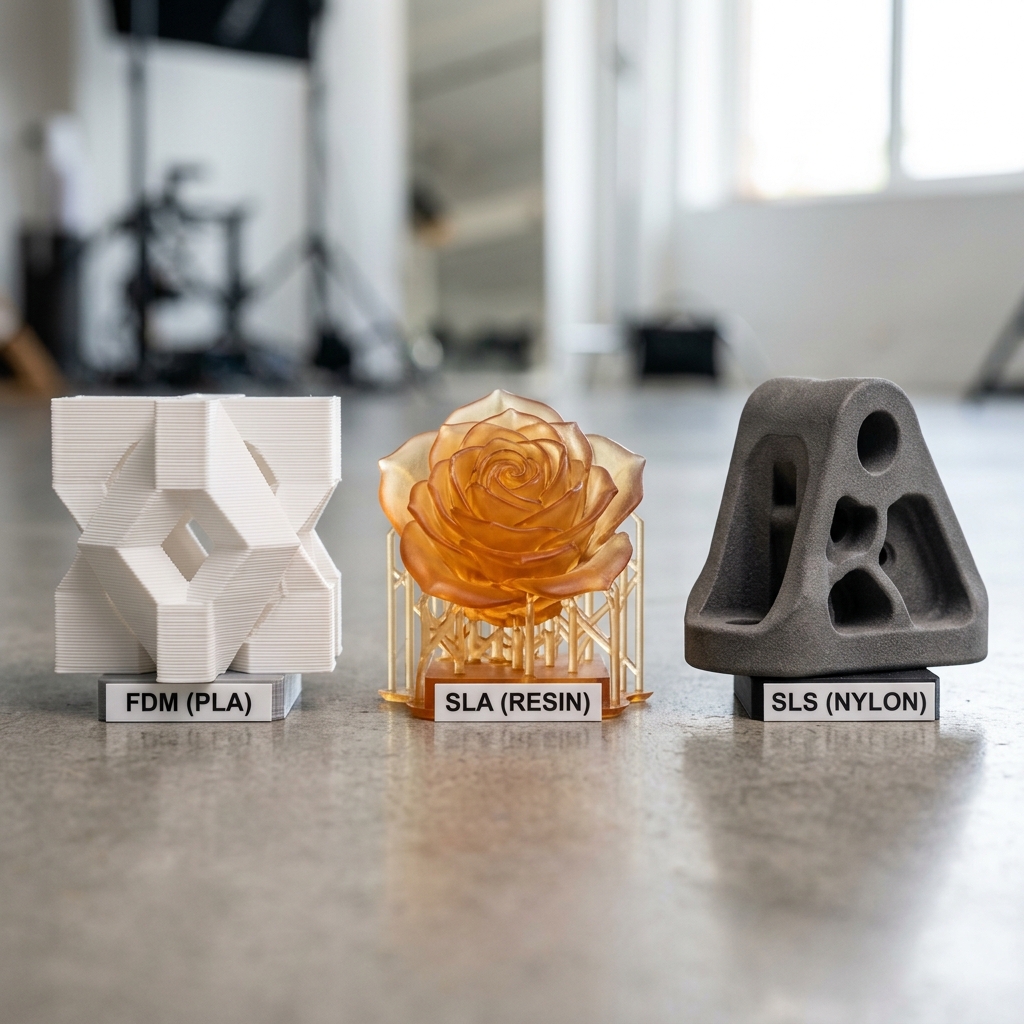
FDM, SLA, and SLS are the three most common 3D printing technologies available today. Each has distinct material properties, accuracy limits, and surface finishes. Choosing the right technology is essential to meeting your project's mechanical requirements and budget, and ThinkToReality is here to help guide your selection. Our state-of-the-art print farm supports all three methods.
Choosing the wrong technology can result in mechanical failures or poor surface finish. ThinkToReality provides functional validation checking, helping you select between polymer resins, industrial filaments, and sintered powders based on your design requirements.
FDM (Fused Deposition Modeling) - Cost-Effective and Functional
FDM works by melting a thermoplastic filament and extruding it layer-by-layer. Offered extensively by ThinkToReality, it is the most affordable technology, using standard plastics like PLA, ABS, and PETG. It is best suited for early-stage visual prototypes, functional brackets, housings, and low-cost parts. Its main limitations are visible layer lines and moderate dimensional accuracy.
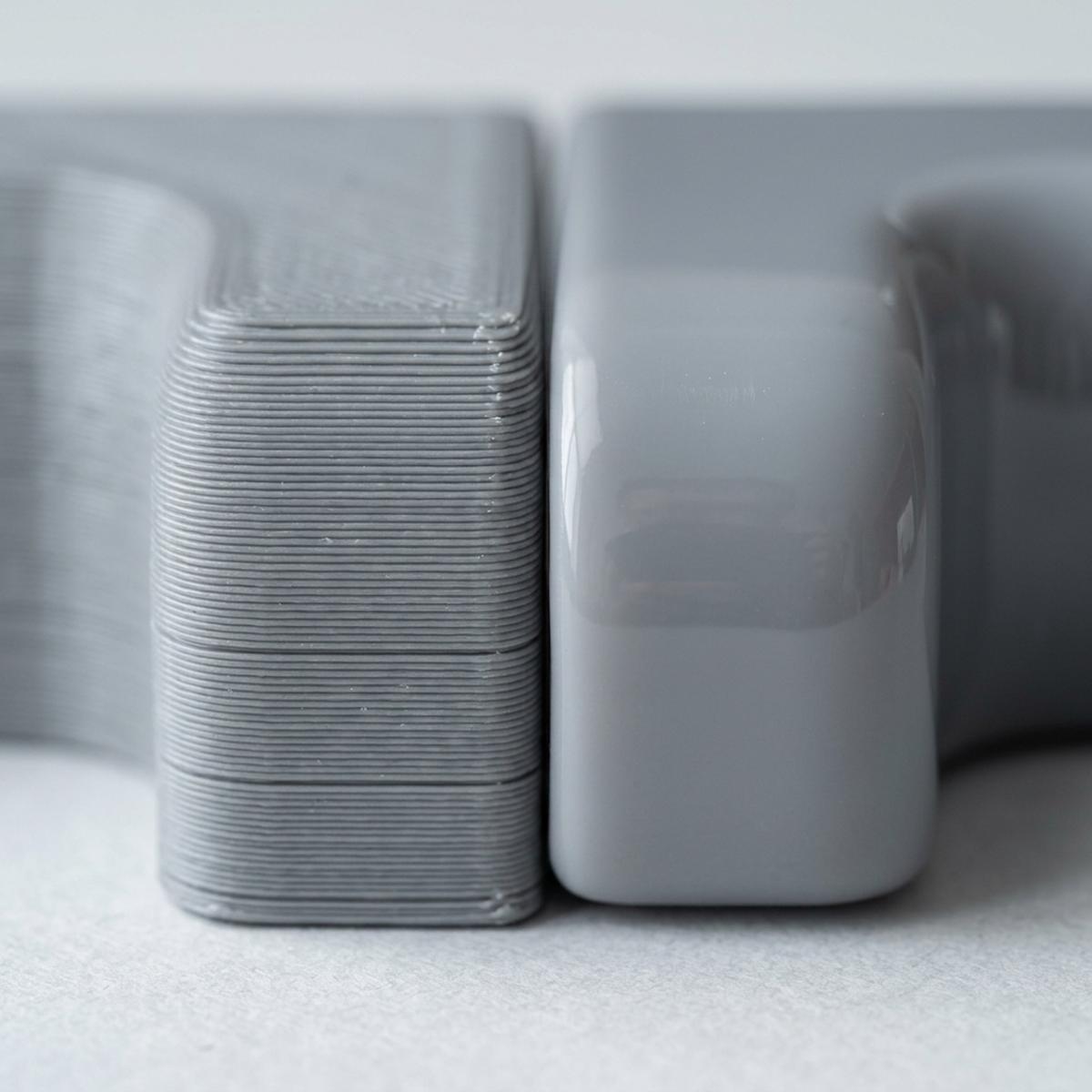
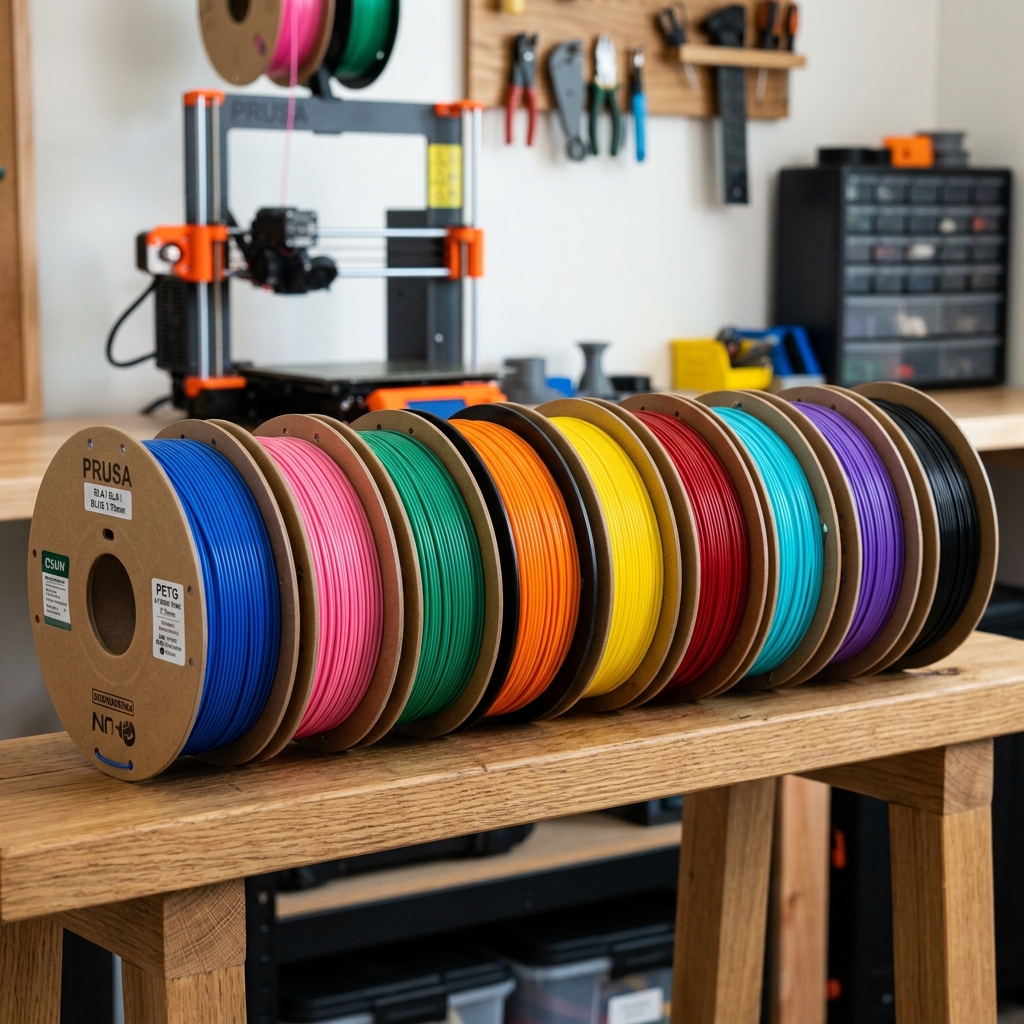
Comparing surface layers, resin parts, and physical filament spools at ThinkToReality.
Despite visible layers, FDM remains the go-to choice for mechanical enclosures and mount brackets that require structural strength. ThinkToReality supports advanced materials like carbon fiber blends to enhance FDM print durability.
SLA (Stereolithography) - Exceptional Detail and Smoothness
SLA uses a UV laser to cure liquid photosensitive resin into solid plastic. ThinkToReality's high-precision SLA service excels at producing highly detailed parts, complex geometries, and smooth surface finishes. It is the standard choice for dental models, jewelry casts, injection mold patterns, and visual presentation models. However, SLA resins can be brittle, and parts require post-processing.
SLS (Selective Laser Sintering) - Industrial Strength and Freedom
SLS utilizes a high-power laser to fuse fine polymer powder (typically Nylon) into solid structures. ThinkToReality utilizes SLS so parts are supported by the unsintered powder in the print bed, meaning SLS requires no support structures. This allows designers to print complex assemblies and functional parts. SLS parts are durable and strong, making them ideal for end-use industrial applications.
Conclusion
Choose FDM when affordability and functional prototyping are key. Select SLA when surface finish and detail are critical. Opt for SLS for high-strength, end-use industrial components. Whatever your choice, ThinkToReality's online platform delivers precision results.
Related Insights
3D Printing for Healthcare in India: Costs, Benefits & Use Cases
Discover how 3D printing is revolutionizing healthcare in India, from custom implants and prosthetics to surgical simulations and anatomical models.
3D Printing in Architecture: Building the Future, One Layer at a Time
Learn how architects use 3D printing to create detailed models, construct complex shapes, and turn digital concepts into physical realities.