
Reverse Engineering in Product Development: From 3D Scan to CAD Model
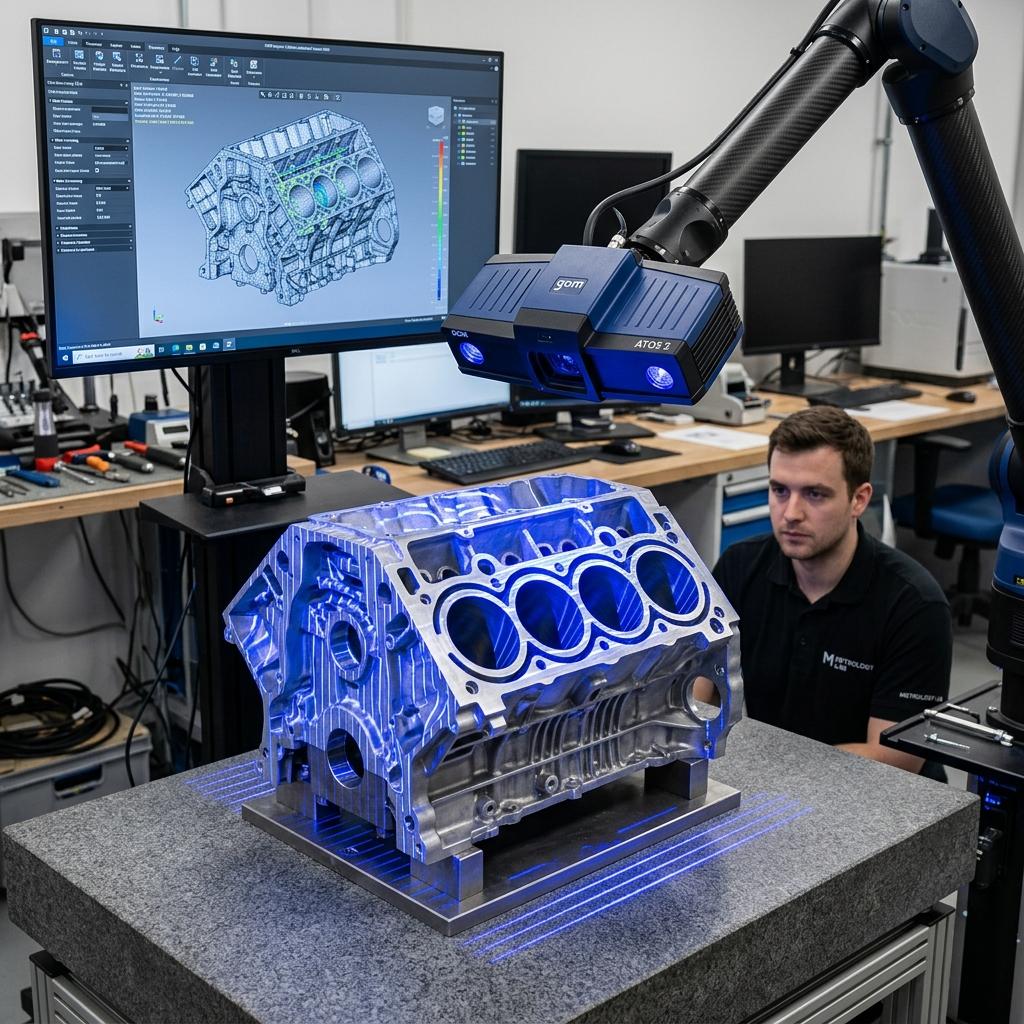
In modern manufacturing, reverse engineering has emerged as a crucial tool for reproducing, modifying, and documenting existing physical parts. Whether dealing with legacy components that lack digital files, optimizing an existing part design, or performing competitive analysis, ThinkToReality's reverse engineering services bridge the gap between the physical world and digital CAD modeling. Our process ensures that structural dimensions are captured with micron-level accuracy.
Using advanced scanning technology, physical parts can be digitized and modified. This eliminates the need to draft complex geometries from scratch, saving design time and reducing prototype cycles. ThinkToReality provides complete engineering services, helping clients convert point cloud scans into clean, parametric CAD files.
Understanding the Reverse Engineering Workflow
The process begins with high-precision 3D Laser Scanning. Advanced laser scanners capture millions of coordinate points from the physical object's surface, creating a highly detailed 3D point cloud or STL mesh representation of the model.
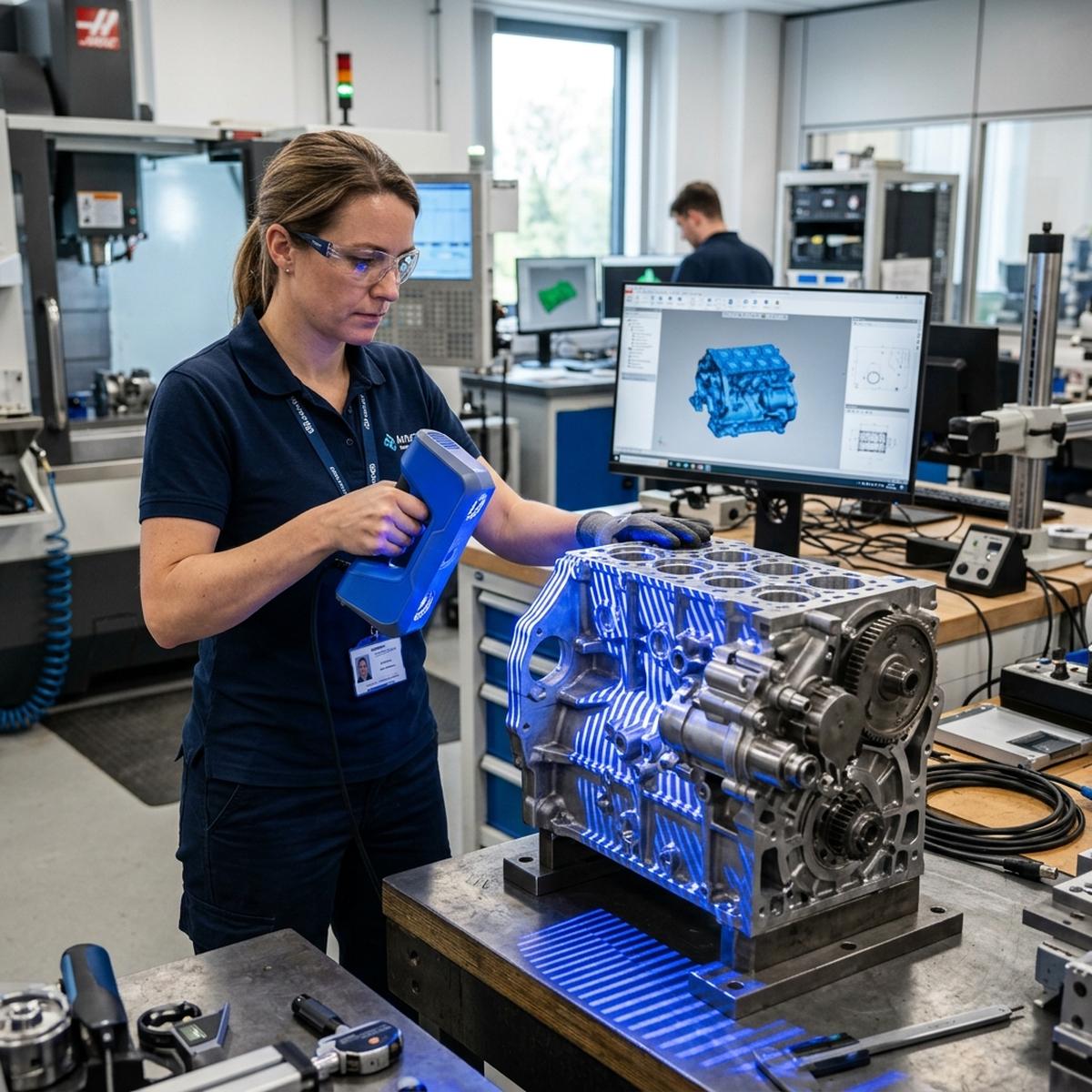
Handheld blue light scans and geometric reconstruction setups at ThinkToReality engineering lab.
Once scanned, ThinkToReality's reverse modeling engineers import the mesh data into specialized CAD software (like Geomagic Design X or SolidWorks). Instead of directly manufacturing the raw scan mesh, which often contains wear, surface imperfections, or scanner noise, our engineers reconstruct the geometry feature-by-feature to create a clean, parametric CAD model with exact design tolerances. This geometry reconstruction is critical for modern CNC machining.
Key Applications in Industry
1. **Legacy Part Reproduction:** Many industrial machines run on components designed decades ago. If a part breaks and the original manufacturer is out of business or the drawing files are lost, ThinkToReality's 3D laser scanning lets you recreate the part precisely.
2. **Product Design Optimization:** Designers scan clay models, handmade prototypes, or existing competitor parts to import their geometry into CAD. Once in a digital format, ThinkToReality's engineers can refine aesthetics, reduce material thickness, or perform structural simulation checks.
3. **Die & Mold Fitment Checks:** Scanning worn mold cavities allows toolmakers to inspect wear patterns and precisely machine replacement inserts to restore standard tooling tolerances.
Why Parametric Models Matter
A raw 3D scan is merely a collection of surface triangles. A parametric CAD model created through ThinkToReality's reverse engineering, however, is a fully editable history-based tree. This allows designers to easily modify bolt hole diameters, adjust wall thicknesses, add structural ribs, and scale dimensions for mold manufacturing or CNC machining.
Conclusion
Integrating 3D laser scanning with expert reverse modeling from ThinkToReality dramatically reduces product development timelines, preserves engineering history, and ensures precise, manufacturable results for legacy parts and new designs alike.
Related Insights
3D Printing for Healthcare in India: Costs, Benefits & Use Cases
Discover how 3D printing is revolutionizing healthcare in India, from custom implants and prosthetics to surgical simulations and anatomical models.
3D Printing in Architecture: Building the Future, One Layer at a Time
Learn how architects use 3D printing to create detailed models, construct complex shapes, and turn digital concepts into physical realities.