Back
CNC & VMC MachiningService: 3D Printing

CNC Machining Metal Selection Guide: Aluminum, Stainless Steel, Brass & Titanium with Surface Finishes
ThinkToReality Engineering Team
November 10, 202618 mins read
CNC Machining Metal Selection Guide: Aluminum, Stainless Steel, Brass & Titanium with Surface Finishes

Selecting the optimal metal alloy for your CNC machined components is one of the most critical engineering decisions in physical product development. The choice of raw material directly dictates tensile strength, corrosion resistance, operating temperature limits, machinability index, surface finish quality, and total manufacturing cost.

Specifying an over-engineered material—such as choosing aerospace-grade 7075-T6 aluminum or 316L stainless steel when standard 6061-T6 aluminum or 304 stainless steel would comfortably satisfy functional loads—can double your tooling wear and raw stock expenses. Conversely, selecting an under-spec material risks mechanical yield failure, fatigue cracking, or galvanic corrosion in the field. In this guide, ThinkToReality's CNC specialists evaluate the primary engineering metals used in Precision CNC & VMC Metal Machining alongside professional post-machining surface treatments.

1. Aluminum Alloys: The Workhorse of Precision CNC Machining

Aluminum is by far the most popular metal for custom CNC milling and turning due to its outstanding strength-to-weight ratio, excellent thermal and electrical conductivity, natural corrosion resistance, and high machinability:
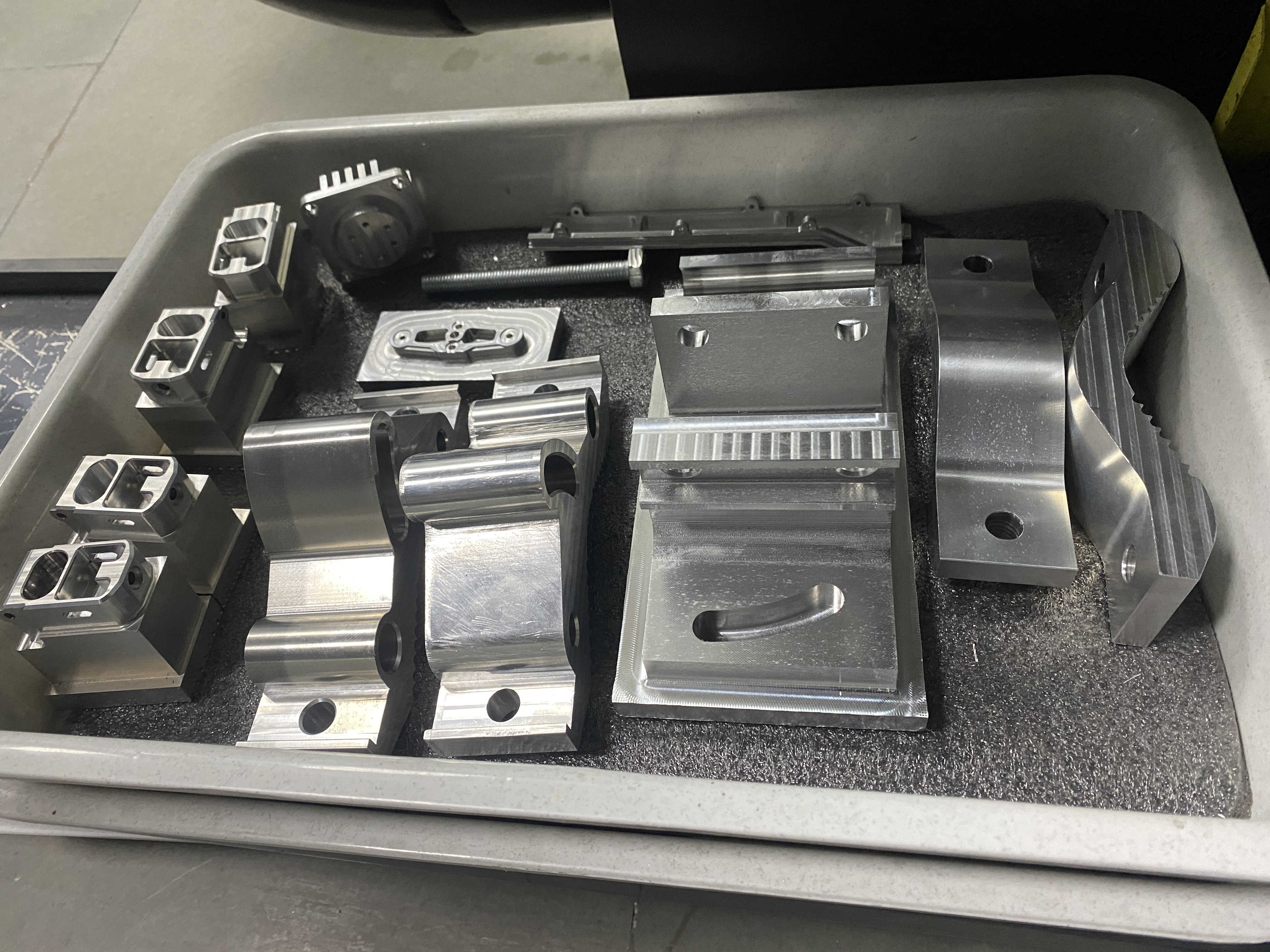
Finished precision CNC turned and milled components showcasing aluminum, stainless steel, and brass with surface treatments.

Finished precision CNC turned and milled components showcasing aluminum, stainless steel, and brass with surface treatments.

Aluminum 6061-T6: The universal engineering benchmark. Contains magnesium and silicon as principal alloying elements. Delivers moderate-to-high tensile strength (310 MPa), superior weldability, and exceptional anodizing cosmetic finish. Ideal for robotics chassis, electronics heat sinks, UAV brackets, and automotive prototypes.
Aluminum 7075-T6: High-strength aircraft alloy alloyed with zinc. Boasts a yield strength exceeding 500 MPa—rivaling many structural steels while weighing one-third as much. However, it is more difficult to machine, carries lower corrosion resistance, and is significantly more expensive. Best for mission-critical aerospace bulkheads, defense weaponry mounts, and high-stress racing hubs.
Aluminum 5052-H32 / 2024-T3: 5052 excels in marine and chemical environments with exceptional salt-spray corrosion resistance. 2024 provides superior fatigue crack resistance for aircraft skins and cyclic-loaded structural ribs.

2. Stainless Steels & Tool Steels: Maximum Strength and Corrosion Defense

When parts must withstand high temperatures, abrasive wear, or aggressive chemical environments, stainless steel alloys are the primary choice:

Stainless Steel 304 (SS 304): The most widespread austenitic stainless steel. Contains 18% chromium and 8% nickel. Provides excellent resistance to atmospheric corrosion, water, and food-grade chemicals. Due to work-hardening tendencies during cutting, rigid carbide tooling and aggressive chip loads are required.
Stainless Steel 316 / 316L (SS 316): Enhanced with 2-3% molybdenum, which drastically boosts resistance to chlorides, salt water, and pitting corrosion. The gold standard for marine hardware, offshore oil & gas fittings, and surgical medical instruments.
Stainless Steel 17-4 PH (AISI 630): Precipitation-hardened martensitic stainless steel. Combines high tensile strength (up to 1300 MPa after heat treatment) with strong corrosion resistance. Perfect for turbine blades, high-pressure pump shafts, and aerospace fasteners.
Tool Steels (D2, P20, O1): High-carbon, high-chromium tool steels utilized in injection molds, stamping dies, shear blades, and wear strips requiring hardness levels up to 58–62 HRC.

3. Copper & Brass: Low Friction and Superior Conductivity

Copper and brass offer specialized electrical and tribological properties:

Free-Cutting Brass (C36000): Often considered the easiest metal to machine with a 100% machinability rating. Produces tiny, brittle chips that clear effortlessly, allowing high spindle feed rates and pristine mirror-like surface finishes. Common in electrical busbars, fluid valves, RF connectors, and decorative luxury hardware.
Oxygen-Free Copper (C10100 / C11000): Unsurpassed thermal and electrical conductivity (100% IACS). Highly gummy during cutting; requires specialized sharp positive-rake polished inserts and flood coolant to prevent material built-up edge (BUE).

4. Titanium & Exotic Superalloys

Titanium Grade 5 (Ti-6Al-4V): The preeminent aerospace and orthopedic biomedical alloy. Features low density (4.43 g/cm³), immense ultimate strength (950 MPa), outstanding biocompatibility, and temperature resistance up to 400°C. Due to low thermal conductivity, heat concentrates at the cutting edge, demanding high-pressure through-spindle coolant and specialized ceramic or carbide tooling with high-feed geometry.

5. Industrial Post-Machining Surface Finishing Options

Raw CNC machined metal parts can be finished with functional and decorative surface treatments to enhance appearance, hardness, and environmental resistance:

As-Machined (Ra 1.6–3.2 µm): Standard visible tool marks with sharp edges deburred and chamfered. Lowest cost option for non-cosmetic internal mechanical parts.
Bead Blasting (Glass Bead / Sandblasting): High-pressure blast of spherical glass beads removes directional cutter lines, leaving a uniform, non-reflective matte satin finish. Excellent primer base prior to anodizing.
Anodizing Type II (Sulfuric Acid Anodizing): Electrochemical process producing a 10–25 µm transparent protective oxide layer on aluminum. Can be dyed in vibrant colors (Black, Clear, Blue, Red, Gold) while protecting against corrosion.
Hardcoat Anodizing Type III: Produces a dense, wear-resistant ceramic-like oxide layer up to 50 µm thick with surface hardness exceeding 60 HRC. Mandatory for military firearms, sliding cylinders, and high-wear aerospace brackets.
Electroless Nickel Plating (ENP): Chemical nickel-phosphorus layer plated uniformly across all internal threads, blind bores, and complex geometries without electrical edge buildup. Offers outstanding wear protection and electrical grounding.
Chemical Passivation (ASTM A967): Acid bath treatment for stainless steel components that dissolves free surface iron and rebuilds the passive chromium-oxide barrier, preventing rust in harsh environments.

6. Summary & How to Order Custom CNC Metal Parts in India

Optimizing your metal part starts with pairing the right alloy with smart DFM tolerances. At ThinkToReality, our engineering lab in Delhi NCR provides end-to-end CNC milling, VMC precision turning, CMM metrology inspection, and certified surface finishing for prototypes and volume production. Explore our Full Manufacturing Capabilities or upload your 3D CAD models for an instant engineering quote.

Related Manufacturing CapabilityOfficial Production Support

Need High-Precision 3D Printing?

Advanced SLA resin, SLS nylon, and FDM 3D printing services for fast, high-quality functional prototyping in Delhi NCR.

Tolerance±0.15 mm
Turnaround24 to 48 Hours
CapabilitiesDFM Validated

Related Engineering Insights

CNC & VMC Machining

VMC Machining vs CNC Milling: Engineering Differences, Workholding & Precision Metal Works in India

A comprehensive engineering guide comparing Vertical Machining Centers (VMC) and traditional CNC milling for custom metal parts. Learn key mechanical differences, 3-axis/4-axis/5-axis spindle configurations, precision workholding, GD&T tolerances (±0.005mm), and industrial metal job work in Delhi NCR & across India.

November 10, 2026Read Guide
Sheet Metal Fabrication

Sheet Metal Design & Precision Fabrication Guide: DFM Guidelines, Bending Tolerances & Manufacturing in India

A definitive engineering guide to precision sheet metal design and custom fabrication in India. Learn essential DFM rules, K-factor & bend deductions, CNC fiber laser cutting, press brake forming, materials, and regional manufacturing across Delhi NCR, Pune, Bengaluru & India.

October 09, 2026Read Guide